


A MIRACLE OF LOVE
Our Lady of Sorrows of the School
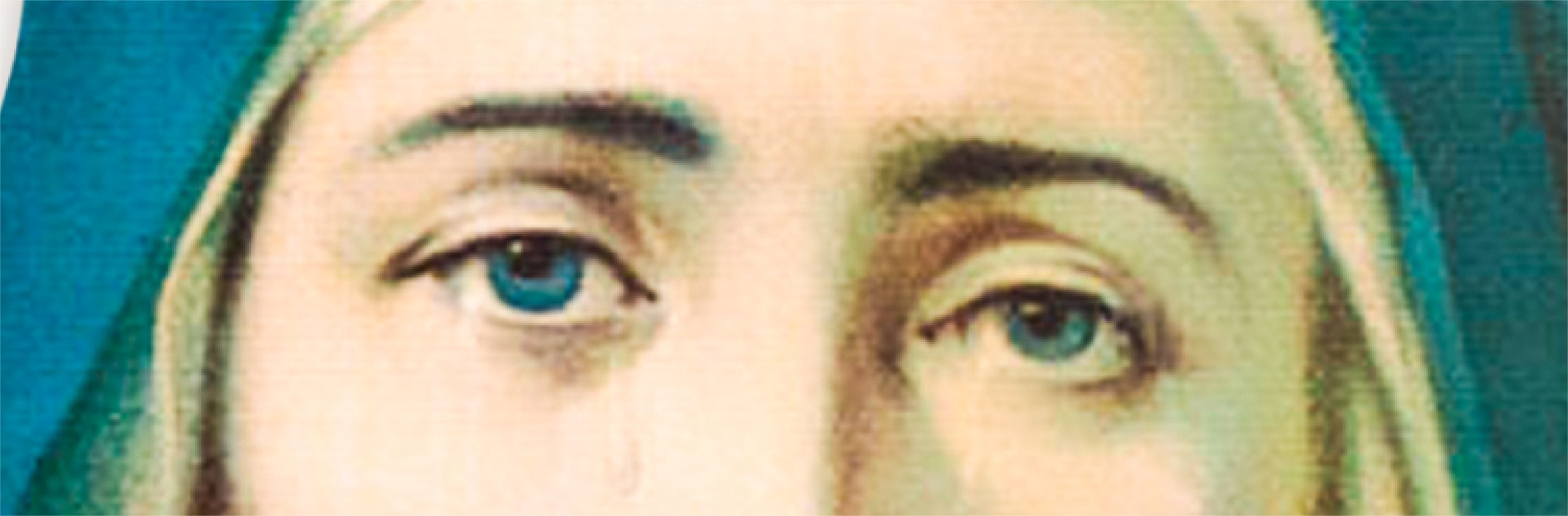
It was the night of April 20, 1906, at the old San Gabriel School building, located at Benalcázar and Sucre streets in the Historic Center of Quito. The Easter vacation was underway. Only 35 boarding students were dining in the cafeteria. The clock struck 8 p.m.
On the right side of the table, on the wall, a lithograph of the Virgin of Sorrows accompanied the students. Very close to the image were Jaime Chávez, Carlos Hermann, and Donoso.
Suddenly, Hermann was stunned. He noticed that the eyelids of the image were moving. At first, the boy thought it was an illusion, but when he realized it was really happening, he exclaimed, “Look at the Virgin!” Both remained astonished as they watched the image open and close its eyes like a living person. imagen se movían. En un primer momento el pequeño creyó que lo visto era producto de su imaginación. Sin embargo, Chávez, quien también se había fijado en la imagen dijo “¡Ve a la Virgen”! Ambos quedaron atónitos observando que la imagen abría y cerraba los ojos como una persona viva.
Overwhelmed by such an unexpected and strange phenomenon, and seeing that the image continued moving its eyes, Chávez invited his companion to pray a Our Father and a Hail Mary.
Gradually, word spread among the other students. One of them reported the event to Andrés Roesch S.J., the school prefect, and Luis Alberdi S.J., the inspector.
Alberdi told Roesch: “Father, this is a miracle.” The prefect approached the painting and then returned to his seat. “I felt a cold that ran through my body, seeing that the image indeed opened and closed its eyes. Whenever this happened, all the children present shouted in unison, ‘Now open, now close,’” recounted Alberdi in his testimony about the miraculous event, which repeated several times and lasted about 15 minutes. Although the Blessed Virgin continued opening and closing her eyes, everyone went to the chapel to pray the rosary. After the students left the dining hall, news of the event spread throughout the school.
On April 21, rumors of the strange occurrence circulated in Quito. The highest ecclesiastical authority at the time, Monsignor Ulpiano López Quiñonez, Vicario Capitular, ordered that “the image be covered and that nothing be published in the press or from the pulpit regarding this event until its authenticity and value are determined.”
Despite the students’ and public’s dissatisfaction, the painting was hidden and no one could see it. On April 27, the Vicario Capitular decreed that witnesses to the event be investigated. Two days later, the Vicario, along with Alejandro López, Secretary of the Curia, and Víctor Gómez Jurado, Notary, visited San Gabriel School.
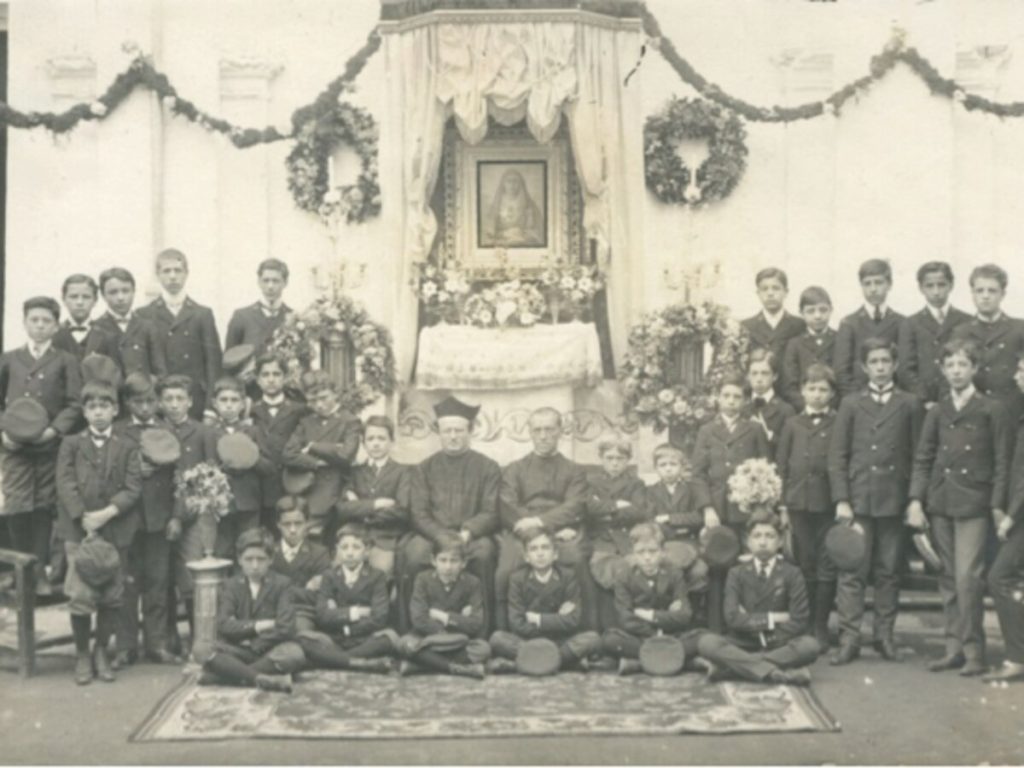
They gathered the 35 students, the two Jesuits, and three employees, asking them to write down what they experienced that day without discussing it with anyone. Among the declarations were those of Miguel Chávez (cook), Manuel Nieto (shoemaker), and Víctor Medina (13 years old, tailor and baker).
All agreed that on the night of April 20, 1906, the image of the Virgin of Sorrows opened and closed its eyes for about a quarter of an hour. Some witnesses provided more detailed explanations, confirming the evidence of the event.
On May 2, 1906, the witnesses formally presented their statements to the authorities and swore to their truthfulness.
On May 30, they were asked again to verbally repeat their statements and confirm or adjust them.
Experts involved included José María Trujillo, Physics Professor at the Central University; Carlos Caldas, Chemistry Professor; José Lasso, photographer; and Antonio Salguero, painter. All concluded that the movement of the eyelids could not have been caused by lighting or the conditions of the room, as it repeated multiple times and was witnessed simultaneously by all present.
A group of doctors also analyzed the case, concluding that it was not a result of sensory illusion.
After all investigations and procedures, the ecclesiastical authority issued its ruling on May 31, 1906, stating in essence:
The event, verified at the Jesuit school, is materially proven to be true.
Given the circumstances, it cannot be explained by natural causes.
Based on the context and consequences, it cannot be attributed to diabolical influence.
Consequently, it may be believed as purely human and, therefore, veneration of the image responsible for the event is permitted by the Church, allowing the faithful to approach it with special trust.
Based on the book Dolorosa del Colegio,
by Father Julián Bravo, S.J., and the Canonical Process.